Flights
Experiences with planes, or not

My phone rang at 3 AM. I answered groggily, “hello.” My boss said, “How quickly can you be on a flight to the Philippines?” The month before, in November 2013, the strongest hurricane ever to make landfall had hit the southern Philippines. That afternoon, I was on my way to the Philippines via Germany and South Korea. My CDC boss was already there, and we had been considering whether I could come to support the World Health Organization’s response as well. As it was getting late in December, we thought my deployment would probably be pushed into the next year. Another planned staff deployment became unavailable, so I was asked to fill in for their rotation. So I expected to go to Manila at some point, but not with only half a day’s warning.
Working in global health, you have a lot of interesting experiences flying to and from other countries. Here are some of my flight stories.
When the Ebola outbreak began in West Africa, the initial CDC teams in Sierra Leone, Liberia, and Guinea were small and primarily composed of medical doctors and laboratory experts. There was a plan for a second round of deployment to take over for them in a month or two. But they quickly realized how explosive the outbreak was in all three countries and that more people were needed. The call went out for anyone who could rapidly deploy to increase the coverage in all three countries. I signed up for Sierra Leone. Most airlines had stopped flights to the three countries; Air France, to its credit, was still flying to Sierra Leone. It was an eerie feeling flying on a mostly empty plane into Freetown. I had never deployed for an outbreak response. It felt like flying into the eye of a hurricane.
As my departure date was approaching, those of us on the same schedule received an email that Air France was discontinuing service to and from Sierra Leone. They said that if we could travel to Conakry, Guinea, Air France was still flying that route. Otherwise, we could make our own arrangements. It felt very French. While we looked into the feasibility of traveling by land to Guinea (safety? visa?), we found another airline option for Sierra Leone.
Leaving Sierra Leone was an incredible relief after a month in an out-of-control Ebola outbreak. After taking off from a layover in Paris, I settled in for a relaxing trans-Atlantic flight. When my seatmates made small talk, I kept it vague that I had been working in “Africa” on “health.” Some of the other CDC deployers were less discreet, and the passengers realized they were on a plane with staff who had just been working on the Ebola outbreak. There were murmurs throughout the plane as the news spread. I’m sure they didn’t enjoy being elbow to elbow with people who, hours before, were in potential contact with Ebola cases.
From Paris, we had traveled a bit over the continent and then the Atlantic Ocean when the pilot came on the intercom and told us we were having a problem. He said that the fuel was decreasing more than expected. He said either we were leaking fuel or the fuel pump was faulty. It was probably the faulty fuel pump, but if you guess wrong, then you run out of fuel in the middle of the ocean. So he let us know we would route back to London Heathrow so they could sort it out. Seemed like no big deal. Then the pilot came on the intercom again. “Folks, we are going to be dumping our fuel into the ocean. If you see that out the windows, don’t be alarmed.” Planes take off with enough fuel for the full flight, which makes them too heavy to land safely if you have to land much earlier than planned. By the time you reach your normal destination, the fuel has been used, and the weight has decreased. This seemed like it was becoming a small deal. As we approached the airport, I saw that the runways had been cleared and they were lined with emergency vehicles with lights already on. Presumably, they were ready to respond to our fiery crash should things go poorly. That felt like we were at a medium-sized deal. We landed fine, and it was just the fuel pump misreporting the fuel we had. We sat on the ground for a while, but they were able to fix it, and we departed. That delay pushed the crew over the allotted time they were allowed to work to fly all the way to Atlanta, so we had to make an additional stop on the East Coast. It felt like one thing after another was preventing me from being home and safe.
In one of my last global deployments, I went to Chad with a colleague to evaluate a surveillance system that had been created for an ongoing Hepatitis E outbreak. From the capital, we had to fly to Salamat, Chad. Salamat has the distinction of being arguably the poorest place in the world. There weren’t regular commercial flights to Salamat, but there were humanitarian flights on the schedule we needed. They would transport us as a favor to the CDC, supporting the public health response.
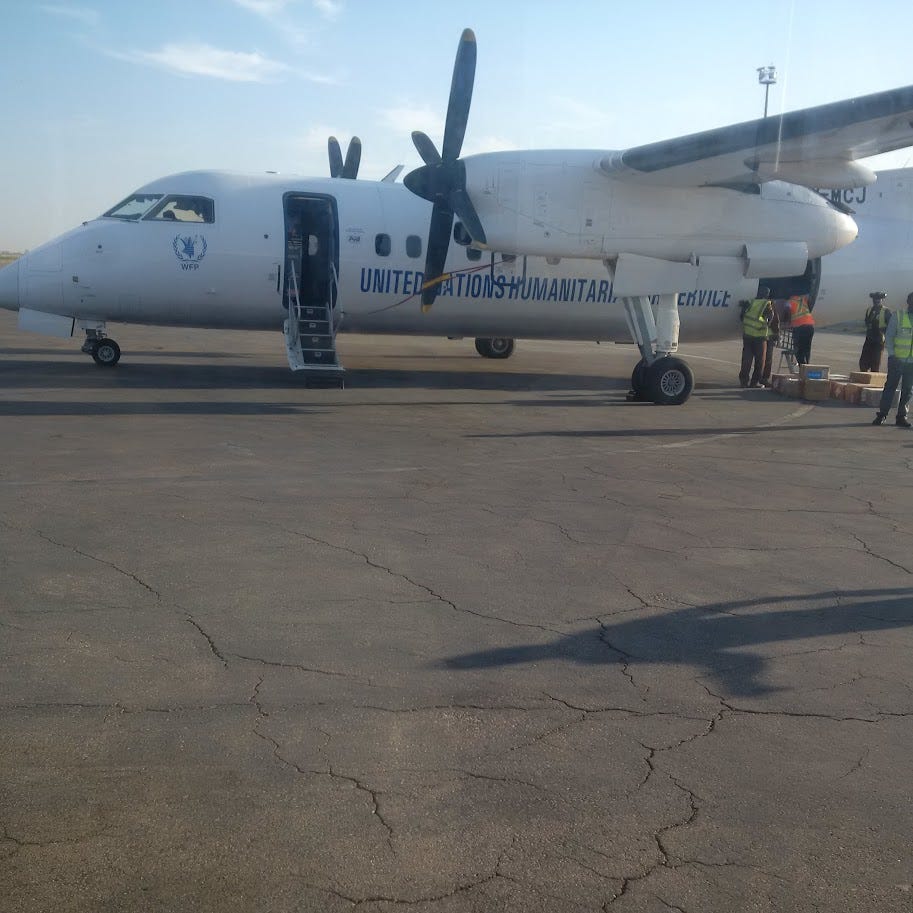
An airplane from the UN Humanitarian Air Service that took my colleague and me to Salamat, Chad, from the capital N’Djamena
After arriving in Salamat, we were able to spend a few weeks meeting with public health staff, visiting clinics, and collecting data. With our mission complete, we went back to the airstrip for the return flight to Njadamena. The return flight was for a Doctors Without Borders team, and again they would transport us as a favor.
As the plane approached the airfield for the return flight, I noticed the plane seemed smaller than the plane that had brought us to Salamat. One of the Doctors Without Borders staff approached my colleague and me and let us know that we would not be able to fit on that flight. There was only room for the returning MSF staff. That presented a challenge for us. We didn’t know when the next flight would be, and my colleague had a meeting in Geneva that was happening soon.
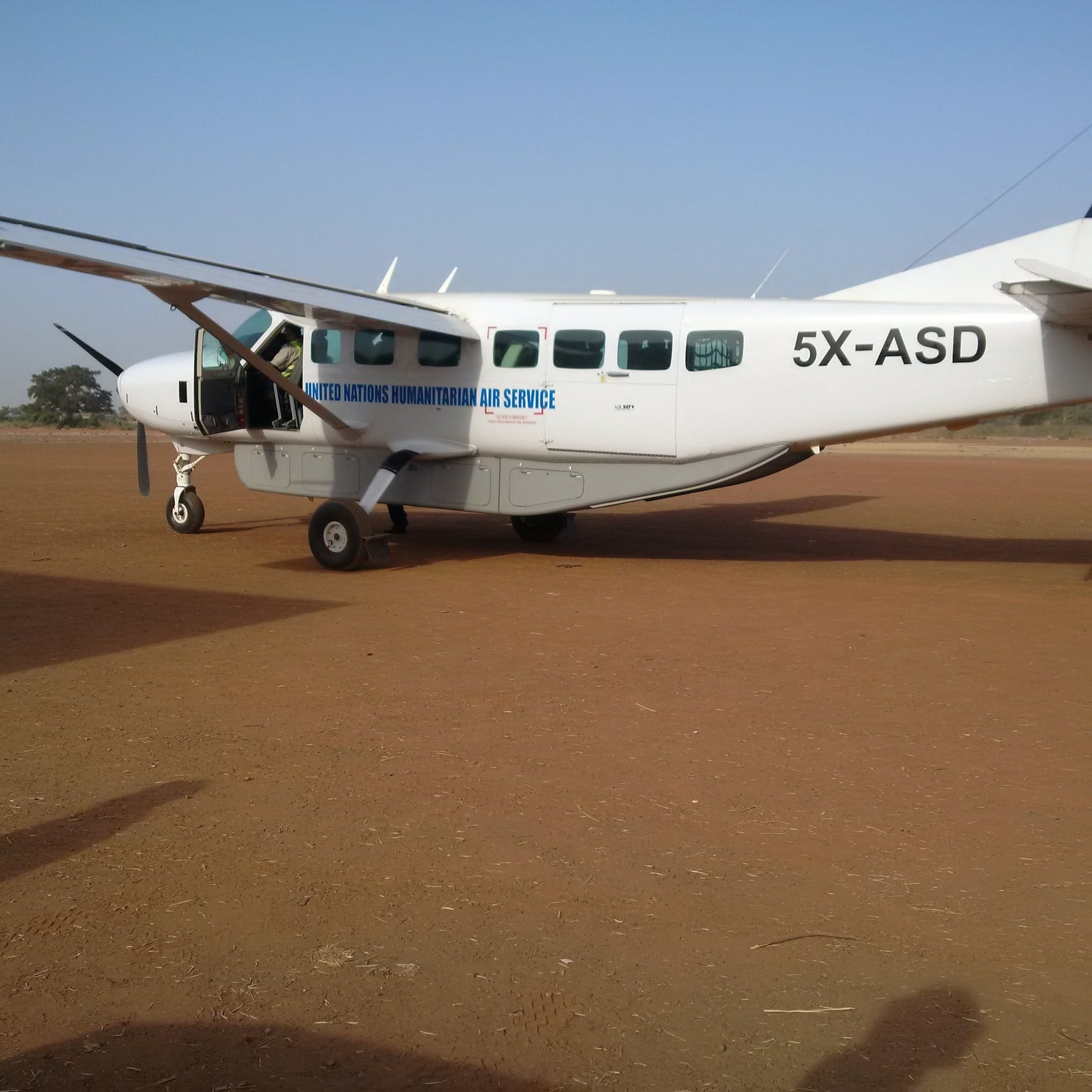
A distinctly smaller plane that did not take us back
We checked in with the embassy staff about our options. They said if our driver was willing we could drive back to the capitol. While Chad had an active insurgency in the north of the country we needed to travel from the southeast to the west across the middle of the country. The embassy asked us to provide our route, major cities we would pass through, and where we would spend the night. There was a humanitarian base along the route and they confirmed we could spend the night. We called the embassy back and received permission to spend two days driving across the country. I got see a lot of interesting landscape and spend the night in a humanitarian base camp.